
Gallatin Deed Types and Uses
The Gallatin County Clerk records deeds. Its fee table confirms contracts for land, leases, easements, restrictions, affidavits of descent, corrections, mortgages, liens, releases, plats, and wills. Legal effect depends on the full text.
| Deed Type | What It Does | Common Use |
|---|---|---|
| Deed or land contract | Records a conveyance or contract interest | Sale and transfer research |
| Correction deed | Corrects an earlier instrument | Name or description cleanup |
| Affidavit of descent | Documents an heirship-related claim | Estate chain work |
| Commissioner or sheriff deed | Records a court-linked transfer | Judicial sale research |
| Plat | Records a subdivision or lot layout | Lot and easement context |
A deed records a transfer of title. A mortgage, judgment lien, mechanic's lien, tax lien, lis pendens, or release records a separate claim or status, so search each category that fits the question.
Use Gallatin Grantor-Grantee Sides
The grantor conveys the interest. The grantee receives it. A buyer shows up as grantee in the acquisition deed and often as grantor in the next conveyance, so search both sides of the index. Watch for initials, spelling variants, heirs, commissioners, and sheriffs whenever the chain calls for them.
- Find the newest acquisition deed with the current owner as grantee.
- Record both parties, the legal description, date, and recording citation.
- Search the grantor as grantee in an older acquisition deed.
- Repeat through prior references, then move to deed books when online coverage ends.
- Grantor
- The party conveying an interest.
- Grantee
- The party receiving it.
- Chain of title
- The linked sequence of recorded transfers.
- Book/page or instrument number
- The clerk's citation for a recorded document.
Get a Gallatin Deed Copy
The clerk's online records page routes private users and commercial subscribers to eCCLIX. Documents can be viewed and printed there. The page posts no image price. Ask the clerk for the current certified-copy amount before sending payment.
Recorded, not guaranteed. Filing shows that an instrument entered the public record. It is not a title opinion and does not prove that no competing interest exists.
Gallatin's 1980 Online Boundary
Gallatin County deed records are available online through eCCLIX from 1980 forward, according to the official clerk records page. Anything earlier requires a call to 859-567-5411. That 1980 date reflects web availability only. The county's land records reach back much further than the digital index.
The clerk's office sits at 803 East Main Street in Warsaw. It is open weekdays from 8:00 a.m. to 4:30 p.m. For a pre-1980 deed search, be ready to give the owner's name, rough years, the legal description, and any index reference you already know. Have those details handy before you call.
Walk Gallatin Deeds Before 1980
The Kentucky Department for Libraries and Archives deed guide recommends reverse chain work. Start from a known deed. Step back by book and page. Deeds from about 1890 commonly cite prior recordings; tax records can bridge earlier gaps; KDLA microfilm and county indexes serve as the archival fallback.
Ask for the right series. Grantor and grantee indexes, deed books, commissioner or sheriff deeds, plats, tax rolls, and referenced instruments all belong on the list. Gallatin formation-era series begin around 1799. The run is not unbroken. KDLA's county-record table identifies Gallatin deed runs for 1852 through 1859, 1861, 1874, and 1876 through 1878, plus county order books spanning 1799 through 2007. Those entries list the finding aid, not every volume.
When a citation disappears, widen the name search and stay tied to the land. Check initials, married names, spelling shifts, heirs, estate representatives, commissioners, and sheriffs. Then compare tax rolls, plats, court orders, and the same legal description across instruments. Identical surnames never prove the same tract.
Gallatin Plats Unlock Deed Descriptions
Local notices link deed records to maps. A Warsaw Harwill parcel cites Plat Book 1 page 18; Willow Pointe Phase One cites Plat Cabinet A-93, and Phase Three cites Plat Slide B-39. Phases can differ, so never merge them or assume every lot shares one plat.
A plat lays out lots, streets, and easement corridors. The deed identifies the interest conveyed. Compare both against the current parcel map after any split or combination.
Gallatin Recording and Copy Costs
The clerk's fee schedule lists minimum recording fees rather than title-search or certified-copy prices. A deed or plat runs $50. A mortgage runs $80. Many releases and affidavits run $46. An affidavit converting property to real estate runs $51.
The open-records policy prices ordinary noncommercial copies at $0.50 per page. Digital media runs $5 unless a statute controls. Advance payment and postage may be required. Confirm the copy type, page count, certification, and total first.
Request Gallatin Deeds Offline
The clerk open-records policy permits hand delivery, mail, fax, or email. Decisions are due within five working days. Use the submission address printed in the policy. Verify it, because the public office page lists another physical location.
Name the parties, instrument type, dates, and citation. The office need not create a title analysis, so a defined request works faster than a broad demand.
Gallatin DOC ALERT Adds Notice
Gallatin DOC ALERT is a free name-and-email enrollment. It emails notice when a deed or mortgage is filed under the enrolled name, which can flag suspicious activity, though enrollment is not a title-monitoring guarantee. The official enrollment screen confirms the simple setup.
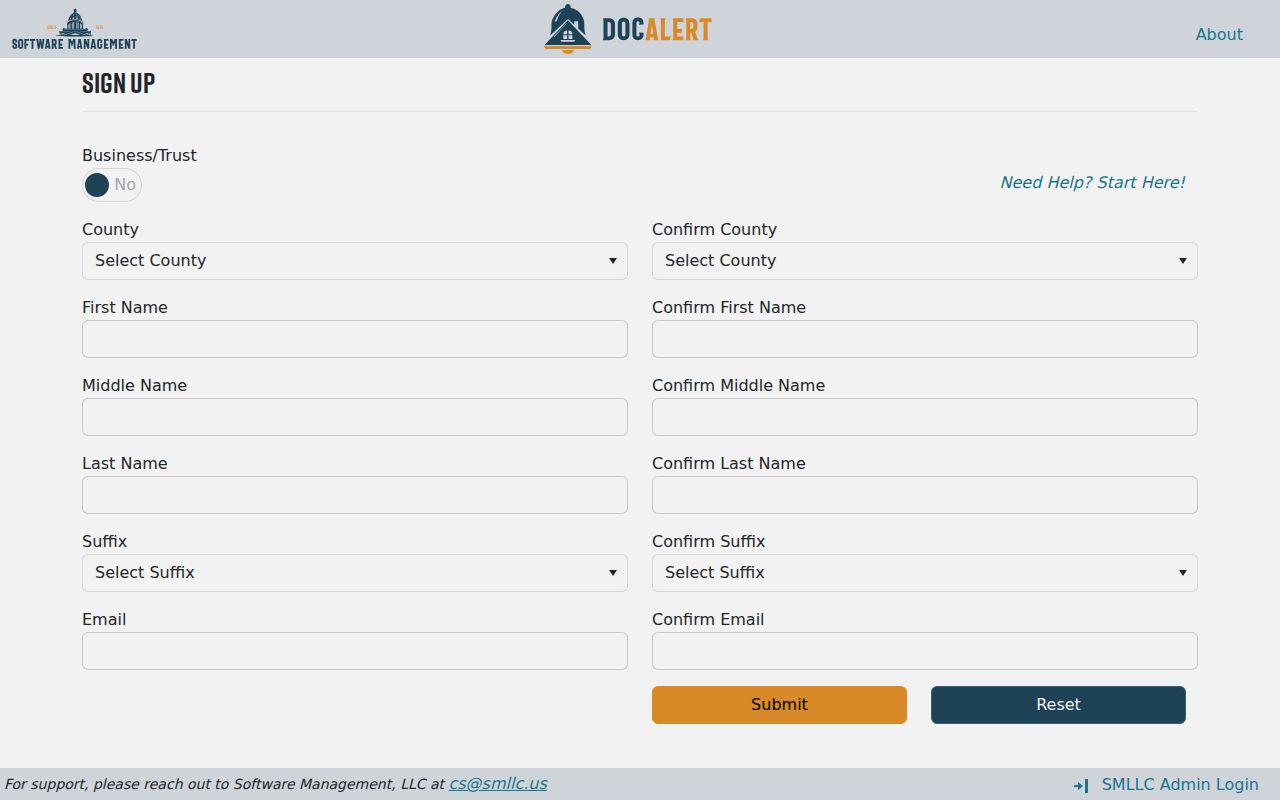
An alert is a prompt, not a conclusion. Review the recorded image, then contact the clerk or a qualified professional as the facts require.
Gallatin Estate Transfers Need More Names
An estate can break a simple surname chain. Search the decedent, heirs, estate, trustee, representative, commissioner, and sheriff terms found in the clues. Gallatin categories include wills and affidavits of descent, while the related probate or foreclosure case file sits with the Circuit Court Clerk.
A judgment is one record; a commissioner's deed is another. Confirm the instrument in the deed index. The court file explains the order behind it.
Save Each Gallatin Deed Field
A deed worksheet should capture every field the clerk recorded. That includes grantor, grantee, instrument type, recording date, and book and page or document number. Add the legal description, clerk certification, and any prior-deed citation. The document image often adds detail a short index row hides. Spouses, heirs, representatives, and restrictions can all appear only on the image itself. Consideration and retained interests can too.
Names repeat in Gallatin County records. Use the legal description to tell same-named parties apart. A mailing address or parcel label helps. But it should never outweigh the land description and the recording citation. Pull each referenced deed, mortgage, release, or plat as its own record.
Field labels and result limits in the live eCCLIX system can change. Trust the controls the interface actually displays. If no address or parcel search mode appears, do not assume one exists.
Gallatin Deeds Exclude Other Claims
Gallatin County land records hold both transfers and encumbrances, but under different instrument categories. Finding the deed is only the first step. Run separate searches for mortgages, assignments, releases, judgment liens, mechanic liens, tax liens, lis pendens, easements, and restrictions that matter to the parcel.
Every release must match its mortgage or lien. Matching by owner name alone can join filings that have nothing to do with each other, so compare instrument numbers, dates, legal descriptions, and cited recordings before drawing conclusions.
The circuit clerk and the county clerk play different roles. A foreclosure judgment stays in the court file. A commissioner's deed or a recorded release belongs in the county land records instead.